The Art of Fire Photography
A practical resource for photographing fire performance: technique, gear, safety, and the creative instincts that turn a burning moment into a lasting image.
How to Photograph Fire Performance
Six fundamentals drawn from the Art of Fire panel discussion and the photographers behind the exhibition.
Shutter Speed & Motion
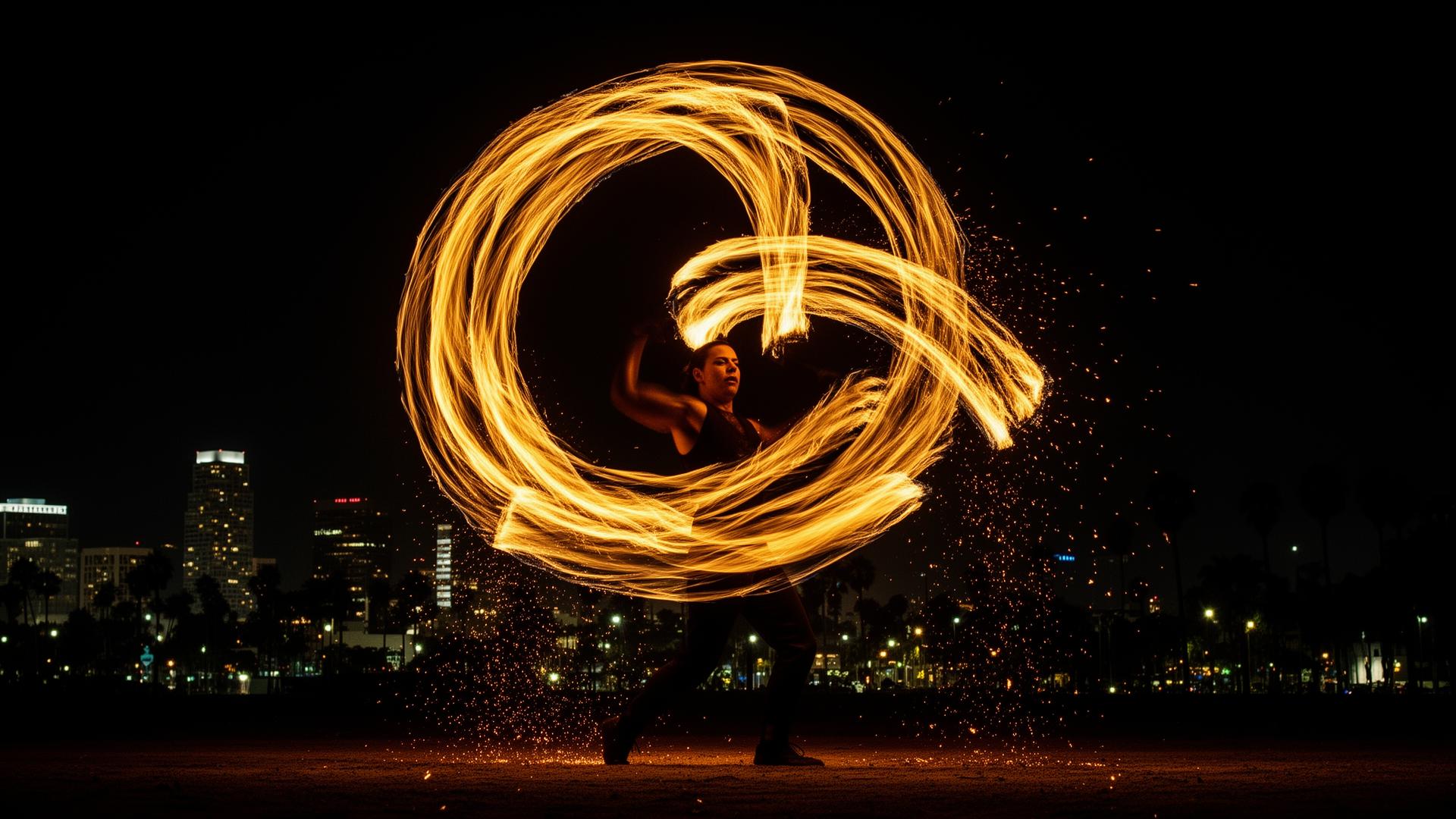
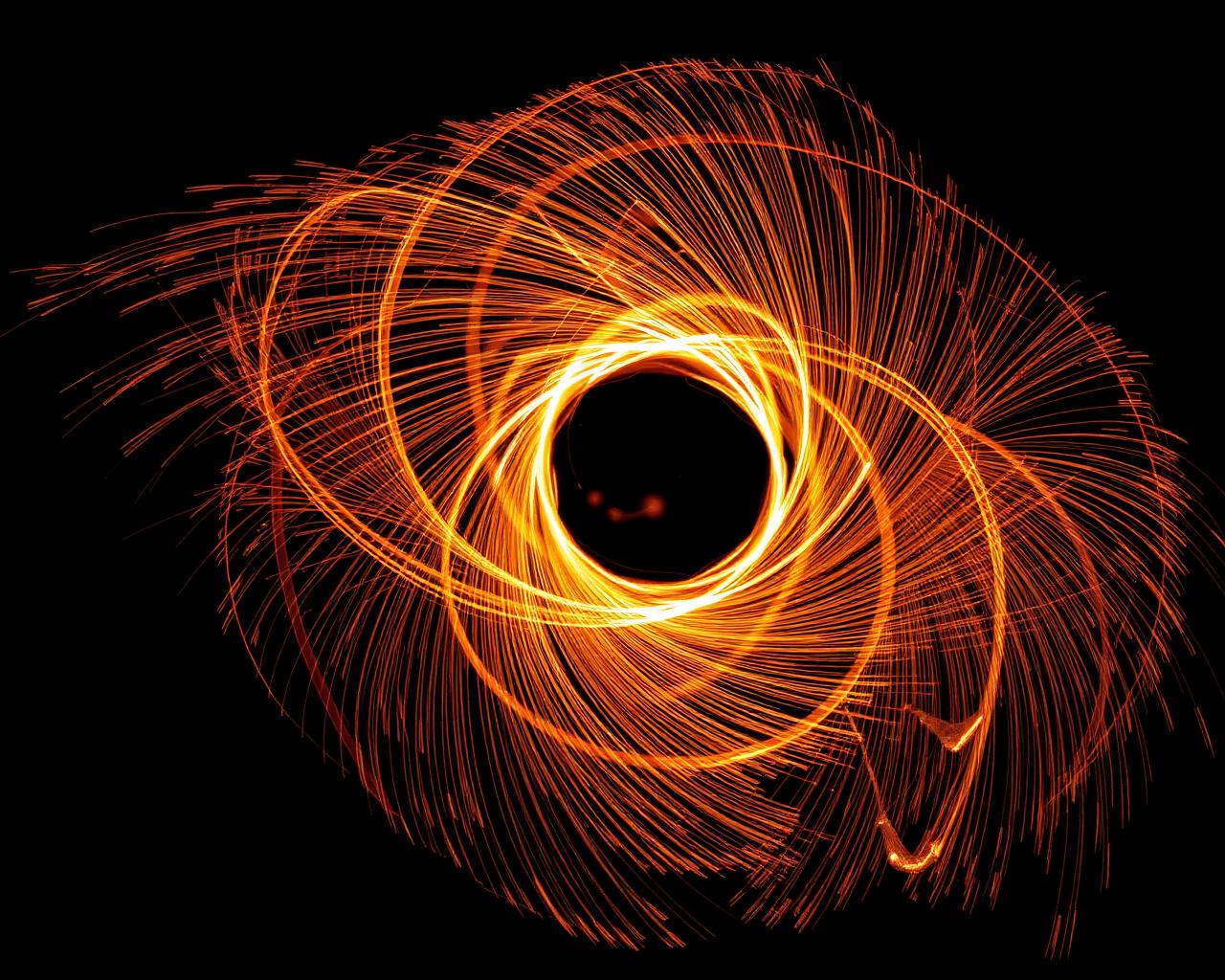
Use 1/60s to 1/250s to freeze a dancer mid-spin while keeping flame trails visible, or drop to several seconds for abstract ribbons of fire. A tripod is essential for exposures longer than 1/125s.
Aperture & Depth of Field
Start around f/4 to f/5.6 for a sharp performer against a soft background. Wider apertures isolate the subject but make focus critical when the performer is moving quickly.
ISO & Ambient Balance
Keep ISO as low as the scene allows — typically 400-1600. Fire is bright, so let it dominate exposure and lift shadows in post rather than overexposing the flames.
Focus & Timing
Pre-focus on the performer's expected path and use burst mode. Back-button focus or manual focus with a marked distance helps when autofocus hunts in low light.
Composition & Story
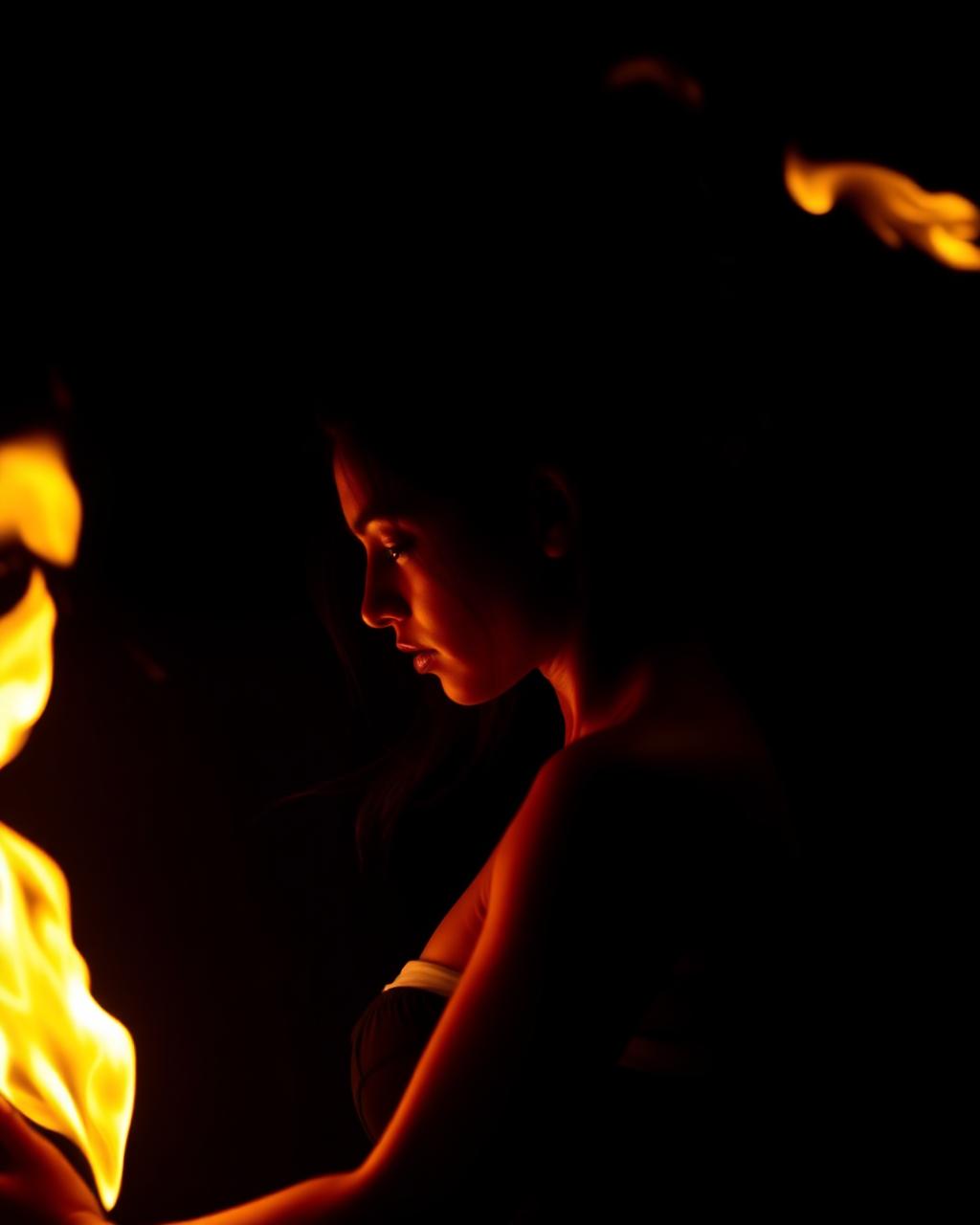
Frame negative space around the flame so the fire can breathe. Include the performer's expression, hands, or the arc of a prop to convey motion and emotion.
Safety First
Stay outside the performer's safety zone, protect your lens from heat, and never use flash without permission. A safety spotter is part of the shot, not an obstacle.
Voices from the Panel
"Fire photography is the opposite of control. You set the stage, choose the moment, and then surrender to what the flame decides to do."
"The best fire portraits happen after the show, when the performer is still glowing — literally and figuratively — from the performance."
"Shoot raw, expose for the highlights, and remember that the darkest parts of the frame are just as important as the brightest sparks."
Fire Performance In Frame
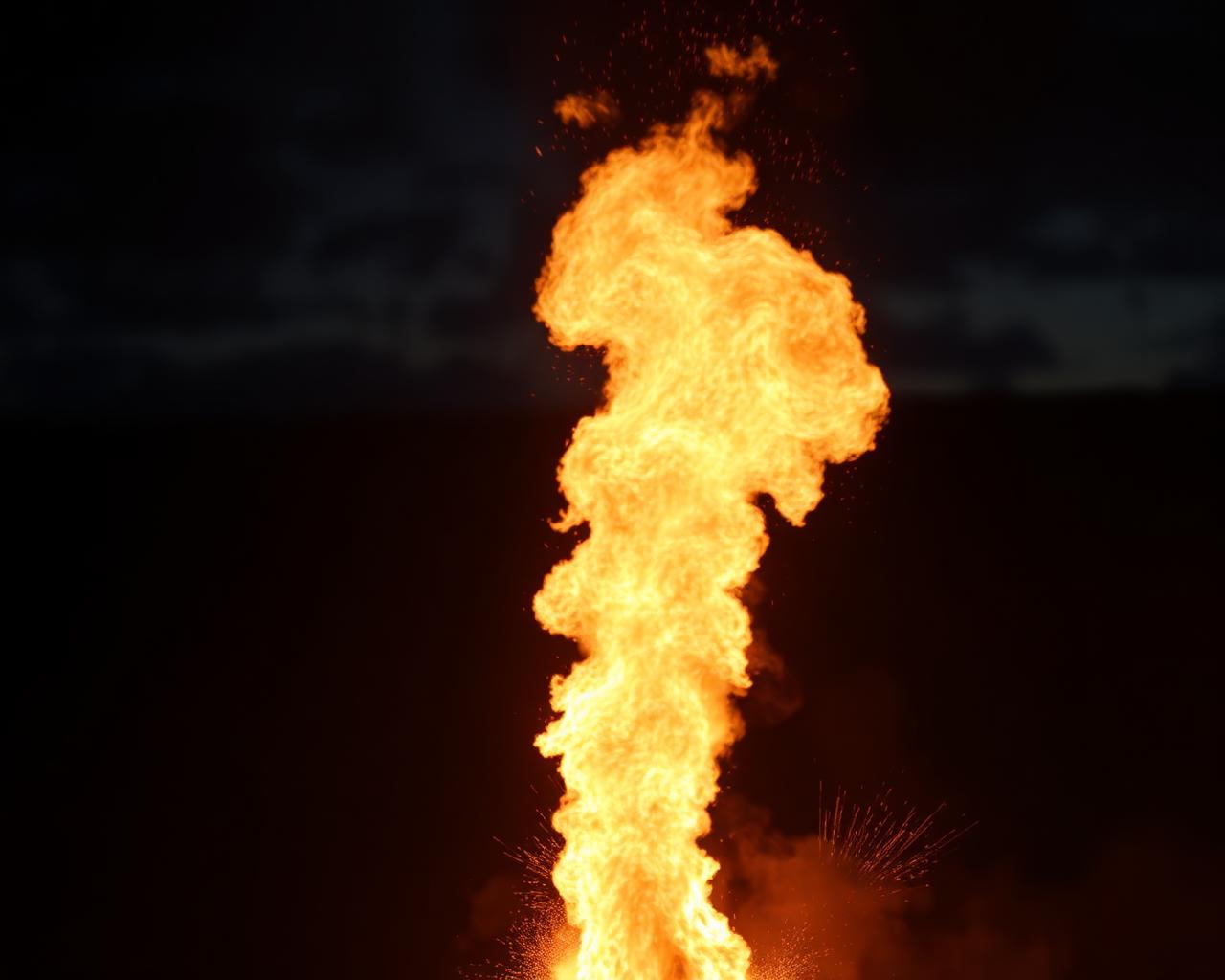
Curated images from the Art of Fire exhibition open call.
Submit Your Fire Photography
Photographers from around the world are invited to register for the Art of Fire open call. Selected work will be featured in the inaugural Los Angeles exhibition.